Rehearsing the First 72 Hours: A Breach-Response Tabletop for UK SMEs
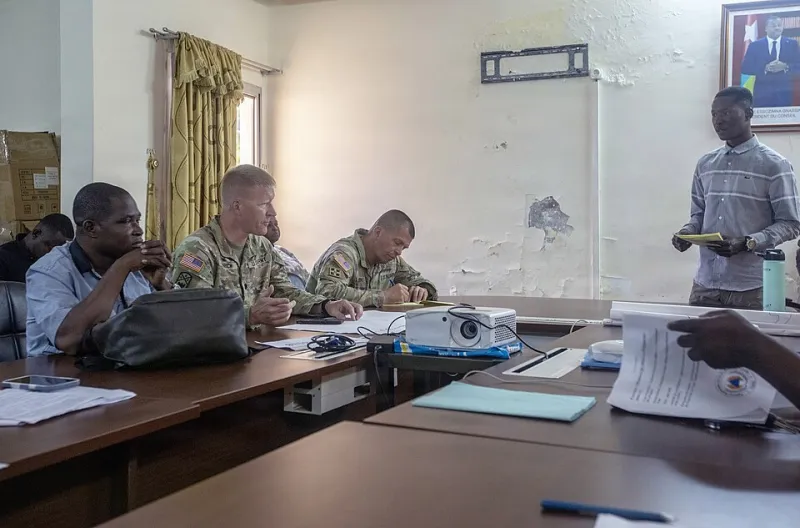
Photo: U.S. Army photo by Sgt. 1st Class Shane Klestinski, Public domain, via Wikimedia Commons
The exercise begins with a calendar invite. At 07:40 on a Tuesday, the operations manager at a 60-person UK marketing agency receives a message from a client: an invoice email has arrived from an address that looks almost right, but not quite. By 08:15, the IT provider confirms that a mailbox has been accessed from an unfamiliar location. By 08:30, the managing director is asking the question that will shape the next three days: do we need to tell the ICO?
This is not a real breach. It is a tabletop exercise, run in a meeting room with coffee, a whiteboard and a facilitator. The scenario is realistic enough to expose the gaps that matter: who convenes the response, who records decisions, what evidence is preserved and how the organisation explains itself if the incident becomes public.
Why the first 72 hours are a memory test
UK GDPR requires controllers to report certain personal data breaches to the Information Commissioner's Office without undue delay and, where feasible, within 72 hours of becoming aware of them. That clock is not the only pressure. Insurers, clients and affected individuals may ask questions later. If the organisation cannot reconstruct what happened, when it knew and why it made particular decisions, the technical response may look weaker than it was.
The tabletop is a rehearsal of organisational memory as much as incident response. It tests whether the organisation can produce a timeline, a decision log and a set of preserved evidence without relying on someone's recollection of a phone call.
Setting the scene: a realistic injection
The facilitator opens with the facts known at 08:30. A finance mailbox was accessed. The attacker sent a convincing invoice to three clients. One client has replied asking for bank details to be changed. The IT provider has reset the password and enabled multi-factor authentication. The agency's managing director is on leave. The external data protection adviser is available by phone after 10:00.
The first inject arrives at 09:15: a client forwards a suspicious email and asks whether its data has been compromised. The second arrives at 10:40: the IT provider reports that mailbox rules were created to forward messages to an external address. The third arrives at 13:00: a journalist from a trade publication emails asking for comment.
Each inject is designed to test a different muscle: escalation, evidence preservation, communication and the reporting decision.
Day zero: contain, convene and record
In the exercise, the first hour is messy. The operations manager calls the managing director, who joins from a train. The IT provider is already containment-focused, which is right, but nobody is recording decisions. The facilitator pauses the exercise and asks a simple question: who is the incident lead, and where is the decision log?
The group agrees that the operations manager will lead, with the external adviser providing data protection input. A shared document is opened and timestamped entries begin. The log records what is known, what is assumed and what is still unknown. It also records decisions that are not taken, such as the decision not to shut down the whole email system because it would hinder the investigation.
Evidence preservation is discussed early. The IT provider is asked to retain mailbox audit logs, sign-in records, message trace data and copies of the malicious emails. The group is reminded not to delete the compromised mailbox or rebuild it before the evidence is secured. In a real incident, this instruction needs to be explicit and documented.
Day one: assessing the reporting threshold
The second day of the exercise focuses on the 72-hour assessment. The group works through the ICO's four-step test: is the incident a personal data breach, what is the likelihood and severity of risk to individuals, is reporting required, and what information can be provided? They identify that client contact details, invoice amounts and some correspondence are involved. The risk is not uniform. One client is a sole trader whose bank details were nearly changed; another received only a routine invoice.
The group decides that the breach is reportable. The facilitator asks what would have happened if they had decided it was not. The answer is a recorded rationale, not a vague recollection. The exercise also tests the ICO's online reporting form, using a printed copy so the group can see what information is requested and where the gaps are.
Day two: communications and evidence
The third day tests communications. The group drafts a short holding statement for clients, a script for the person answering the phone and an internal note for staff. The facilitator introduces a complication: the journalist has heard a rumour that customer data was sold online. The group must decide what it can say without speculating.
The exercise also tests evidence retention. The group identifies that the decision log, the incident timeline, the ICO submission, the client communications and the IT provider's investigation notes should be kept together in an incident folder. Access should be restricted but not so restricted that the managing director cannot find the file. A post-incident review is scheduled, even though the incident is not yet closed.
Day three: the review that starts immediately
The final part of the tabletop is a short lessons review. The group identifies three gaps: no out-of-hours contact list, no pre-agreed template for client notifications and uncertainty about who authorises the ICO report. Each gap is assigned an owner and a date. The facilitator reminds the group that a tabletop is not a test of individual competence. It is a test of the organisation's ability to remember, decide and explain under pressure.
Designing your own tabletop
A useful exercise does not need a large budget. Choose a scenario that is plausible for your sector. Invite the people who would actually be involved, including an IT provider or external adviser if they are part of your response. Appoint a facilitator who is not the incident lead. Prepare three or four injects that arrive at set times. Keep a decision log during the exercise, just as you would in a real incident. End with a short review and a list of actions with owners and dates.
The first three days of a breach are rarely calm. A tabletop will not make them calm, but it can make them legible. When the real call comes, the organisation should be able to find its timeline, its decisions and its evidence without reconstructing the incident from scattered inboxes.