Deliberate Forgetting: Why Backups Alone Leave UK Organisations Exposed
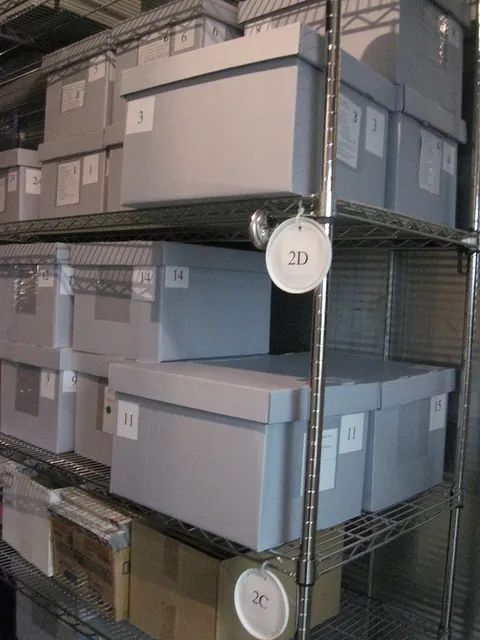
Photo: Digital Game Museum on Flickr, CC BY 2.5, via Wikimedia Commons
Most organisations would say they take their records seriously. Fewer could produce a written rule explaining when an internal memo should stop existing. Resilience planning has become routine in UK boardrooms; deliberate disposal has not. We back up, replicate and archive, then describe the result as good stewardship. In practice it is often the opposite: a growing store of half-remembered conversation that nobody owns and everyone can be asked about.
A second copy is not a strategy
Backup and retention answer different questions. Backup asks whether the organisation can restore service after loss. Retention asks whether the organisation should be holding the material at all. Confusing the two produces a familiar pattern: systems designed never to forget, governed by policies that were never written. The consequence is not resilience but accumulation, and accumulation carries a cost measured in legal exposure rather than disk space.
The distinction matters most for the least formal material. A board minute is drafted with an eye on the file. A hurried message between two managers at 21:40 on a Friday is not. Chat logs, meeting transcripts, draft notes and internal commentary now make up the bulk of what an organisation actually remembers, and they are precisely the records least likely to be classified, scheduled or reviewed.
Storage limitation is an active duty
Under the UK GDPR, personal data must be kept no longer than is necessary for the purpose for which it was collected. That principle is often treated as a drafting exercise: a schedule in an appendix, reviewed annually, honoured in spirit. It is better understood as a continuing operational duty. Necessary for what, held by whom, reviewed when, deleted how. Each of those questions requires an answer that a regulator, a claimant or an auditor could examine.
The ICO has consistently framed retention as a design question rather than a housekeeping one. That framing is unhelpful to organisations that treat deletion as an occasional clean-up. A policy saying 'retain for seven years' without saying seven years from what event, in which system, under whose authority, is not a retention policy. It is a placeholder.
Subject access: the cost of searching everything
A data subject access request must ordinarily be answered within one month. The statutory clock is unforgiving, but the practical burden lies earlier, in locating the material. An organisation that has kept every draft, every side conversation and every superseded version must search all of it, then assess all of it for exemptions and third-party rights.
Deletion reduces that burden honestly. The point deserves precision, because the argument is sometimes misused: disposal is not a route to avoiding disclosure of records that ought to exist. It is a route to ensuring that searches reflect the organisation's actual record-keeping, rather than the residue of tools that were never governed.
Breach blast radius and the 72-hour clock
Where a personal data breach is likely to result in a risk to individuals, it must be reported to the ICO without undue delay and, where feasible, within 72 hours. The assessment made in those hours is partly quantitative: how many people, which categories of data, what harm is plausible. An archive of dormant chat logs widens every one of those answers.
The same logic applies to ransomware. Material that no longer exists cannot be exfiltrated, and the position of an organisation is materially different when the stolen data is a defined set of current records rather than a decade of informal commentary. Retention discipline is a security control before it is a compliance one.
A forget-by-default framework
The practical alternative to accumulation is a policy that assumes disposal and requires a justification for keeping. Six elements are enough to begin.
- Classify by purpose, not by format. Group material by why it exists (statutory record, contractual performance, operational reference, ephemeral coordination) and let the purpose set the clock.
- Attach a clock to each class, with a defined trigger event. 'Three years after the contract ends' is workable. 'As long as needed' is not.
- Change the defaults in the tools. Set message retention, transcript expiry and version limits so that permanence becomes an exception requiring a decision.
- Review at trigger points, not only on a calendar. Contract end, case closure, staff departure and project completion are the moments when retention decisions are cheap.
- Dispose verifiably. Deletion should reach backups, replicas, exports and the personal drives nobody audits. Record what was deleted, when, under which rule and by whom.
- Log the exceptions. Where litigation holds, regulatory requirements or genuine business need justify longer retention, record the reason and the review date.
Objections worth taking seriously
The most common objection is that memory has value: precedent, context, institutional learning. That is true, and it argues for curation rather than hoarding. A short, well-maintained record of decisions and their rationale serves an organisation better than an unsearchable archive in which the useful and the incidental are indistinguishable.
A second objection concerns litigation holds and statutory obligations, both of which must override ordinary disposal. A forget-by-default policy should make that override explicit and auditable, rather than treat it as licence to retain everything indefinitely.
Where to begin
Start with one system, usually the messaging platform where informal decision-making actually happens, and apply a retention rule to it. Measure the effect on search, on access requests and on storage. Then extend the same discipline to transcripts, ticketing, shared drives and email. The aim is not a clean sweep but a habit: an organisation able to say, with evidence, why each category of memory still exists.